Why Water Flow Matters in Luxury Bathrooms
Today’s bathroom designs have shifted to incorporate experience, along with aesthetics. Comfort, wellness, and usability have become key aspects of luxury interior design.
This has made people more aware of the nature of water flow. The nature of the water flow impacts the feel of water on the skin, the cover it offers, and even the appearance of the shower while it is being used.
For luxury showers, water is no longer seen merely as functional. It becomes part of the overall experience. Selection of the water flow type makes a big difference.
The aerated flow is created by adding air into the water flow. This makes the flow heavier and softer while saving water compared to the normal water flow. By the addition of air, the flow becomes voluminous. For this reason, the aerated water system is often applied to both taps and shower heads.

One of the greatest benefits of aerated water flow in luxury showers is that it helps provide a good shower experience while increasing water efficiency. The flow is heavy despite the low use of water. It therefore forms a good option for people who need to achieve both comfort and efficiency.
How Does a Faucet Aerator Work?
Faucet aerator is a small device used to be fitted to the end of a tap. The job of this device is to make the water flow pass through air before it is released from the faucet. Through this process, the aerator ensures better flow while conserving water.
Some of the main benefits include:
- Reduced water usage
- Softer water delivery
- Less splashing
- Improved everyday comfort
Understanding how the faucet aerators operate may give homeowners an idea of how little engineering can affect the entire user experience. Although generally connected to faucets, similar principles are often applied in showers in order to soften the water flow.
Unlike aerated flow, laminar flow does not involve mixing of air and water. In this case, the water flows in well-defined streams that appear crystal clear, almost like glass. This is because no air is present in the water stream.
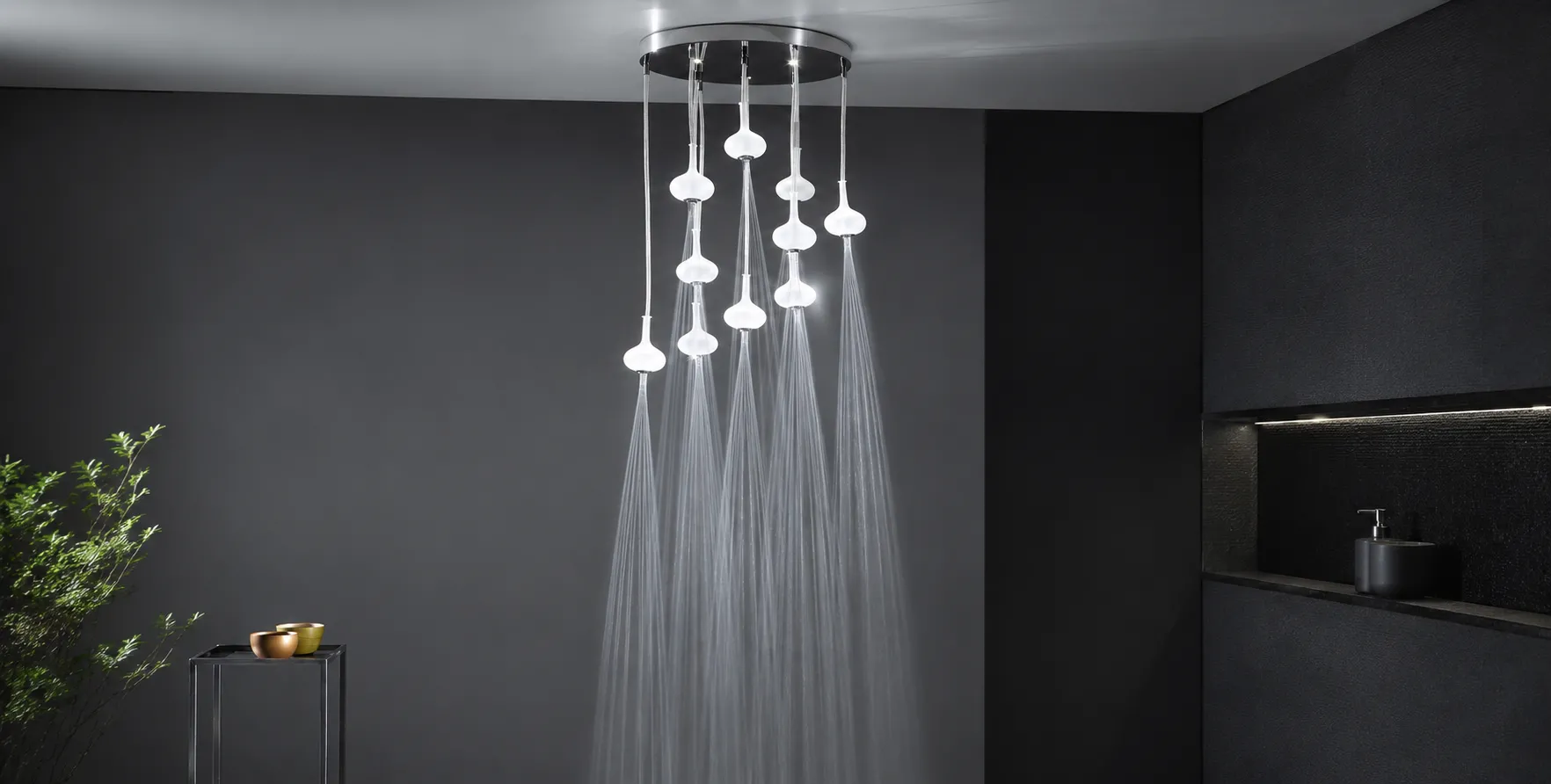
The laminar flow of the shower system is often selected for high-end bathrooms due to its beauty and elegance in delivering water.
This flow pattern can be very effective where the designer wants to establish a strong relationship between water and architecture. The beauty of the stream itself creates elegance.
Aerated Flow vs Laminar Flow: Key Differences
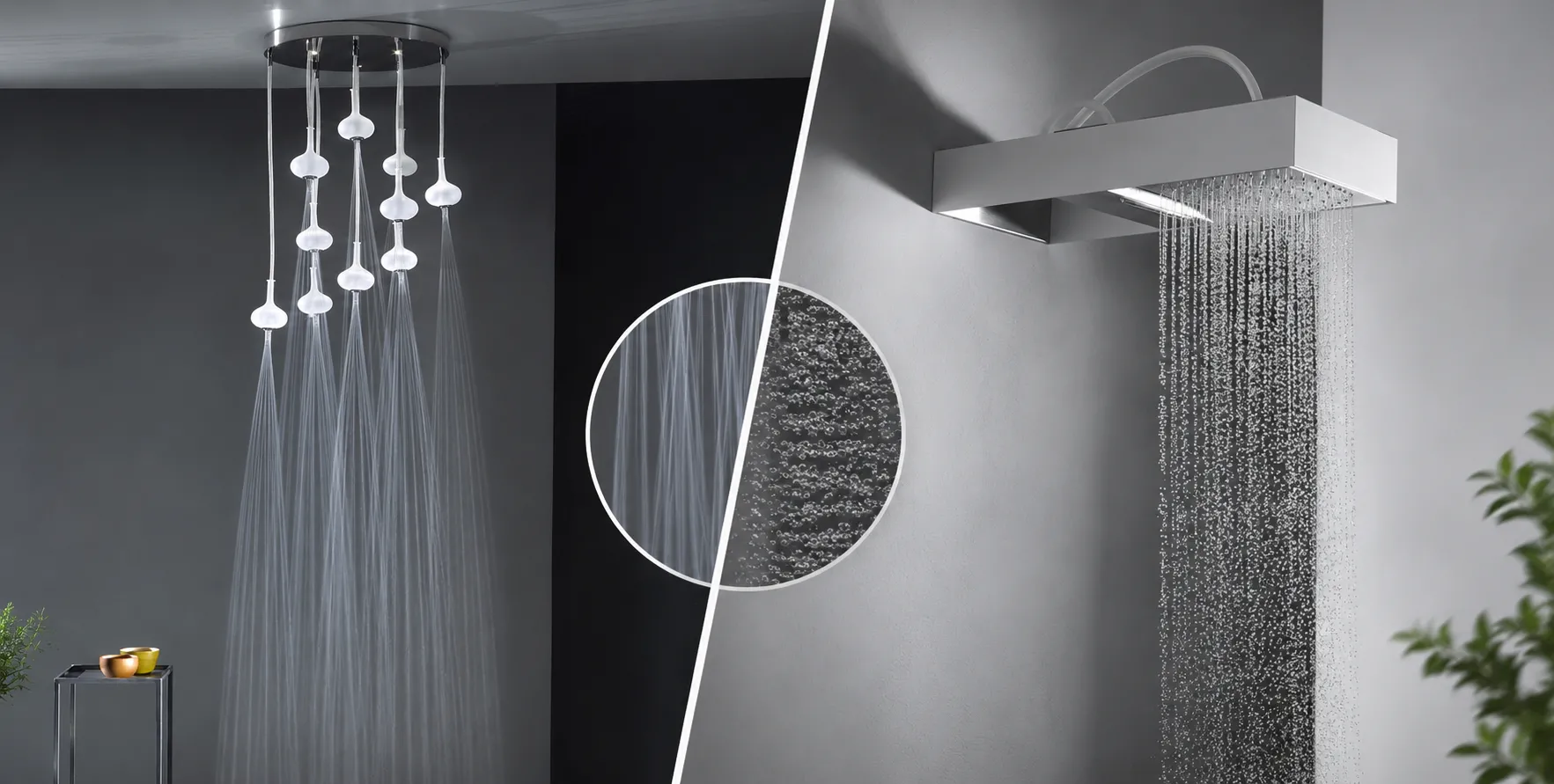
When comparing aerated flow vs laminar flow, it is important to understand that neither option is inherently better. Each creates a different water experience and serves a different purpose within the bathroom. The right choice depends on the desired balance between comfort, efficiency, and visual appeal.
| Feature |
Aerated Flow |
Laminar Flow |
| Water Composition |
Air is mixed into the water stream |
Water flows without air mixing |
| Water Sensation |
Soft, full, and gentle |
Smooth, controlled, and precise |
| Visual Appearance |
Slightly opaque and voluminous |
Crystal-clear and well-defined |
| Water Efficiency |
Often improves water efficiency |
Focuses more on flow quality and clarity |
| User Experience |
Comfortable and enveloping |
Refined and visually elegant |
| Common Applications |
Faucets and everyday shower systems |
Premium showers and wellness environments |
| Design Appeal |
Practical and comfortable |
Architectural and luxurious |
The key difference between aerated and laminar flows lies in how water feels and looks when used. In fact, aerated flow is intended to make water softer and more voluminous, whereas laminar flow is intended to make water clear and precise. It is not rare to find both types of flow in one bathroom.
Which Flow Is Better for Luxury Showers?
The choice would depend on the type of experience that one wants to achieve. An aerated flow is ideal where there is a need for a mellow experience. It can be used to develop an everyday shower experience while ensuring water efficiency.
Laminar flow is usually selected where aesthetics and controlled water distribution are the key aspects.
Many luxury bathrooms now combine multiple flow experiences within a single shower system. This allows users to select different water patterns depending on their mood or wellness goals. The best choice is often neither flow nor the other. It is selecting the flow that aligns with the intended experience.
The FIMA Perspective on Water Experience
At FIMA, we see water as a utility and an important element of bathroom design. Each kind of water flow produces a unique sensation that affects the overall experience in the space.
This is the reason why contemporary shower systems concentrate more and more on giving various water experiences. In addition to a usual rain shower, one can choose from such types as Mist (lighter feeling), Energy (more invigorating), and Laminar flow.
Our design concept is based on the idea that the shower needs to fit the person. By presenting various flow types in the same setting, the bathroom becomes a more personal and health-oriented place. Such a viewpoint makes water an active component of rest and wellbeing.
Choosing the Right Flow for Your Bathroom
When selecting a shower system, it is important to think about how the bathroom will be used.
Consider the following factors:
- Desired comfort level
- Wellness and relaxation goals
- Water efficiency requirements
- Overall bathroom design concept
For some households, aerated flow will suit their need for a perfect combination of comfort and efficiency. For some others, laminar flow will suit their pursuit of a fine aesthetic experience.
It is crucial for the water experience to suit the overall design objective of the place.
Understanding aerated flow and laminar flow can give us insight into how much water flow impacts the entire shower experience. While both systems do essentially the same thing, they produce vastly different sensations and sights.
Aerated flow brings softness, volume, and efficiency, whereas laminar flow brings clarity, accuracy, and elegance. Both cannot be considered superior to one another. Rather, the best flow choice depends on what kind of experience you want from your bathroom.
At FIMA, we believe that water must be felt. Through thinking of different flow types during the design phase, we are able to create a bathroom experience that is much more pleasant, personalized, and suitable for modern well-being living.
FAQs
What is the difference between aerated flow and laminar flow?
Aerated flow mixes air with water to create a softer and fuller sensation. Laminar flow delivers water in smooth, non-aerated streams that appear clearer and more controlled.
What does a faucet aerator do?
A faucet aerator introduces air into the water stream before it leaves the faucet. This helps reduce water consumption, minimise splashing, and create a more comfortable flow.
Is laminar flow better than aerated flow?
Neither option is universally better. Laminar flow is often preferred for its visual clarity and precision, while aerated flow is valued for its softness and water efficiency.
Are laminar flow showers more luxurious?
Laminar flow showers are often associated with luxury bathrooms because of their elegant appearance and controlled water delivery. However, luxury shower design depends on the overall experience rather than a single flow type.
Which water flow is best for modern luxury bathrooms?
The best flow depends on the desired user experience. Many modern luxury bathrooms combine multiple flow options, allowing users to enjoy different sensations based on their preferences and wellness routines.
 04/07/2026
