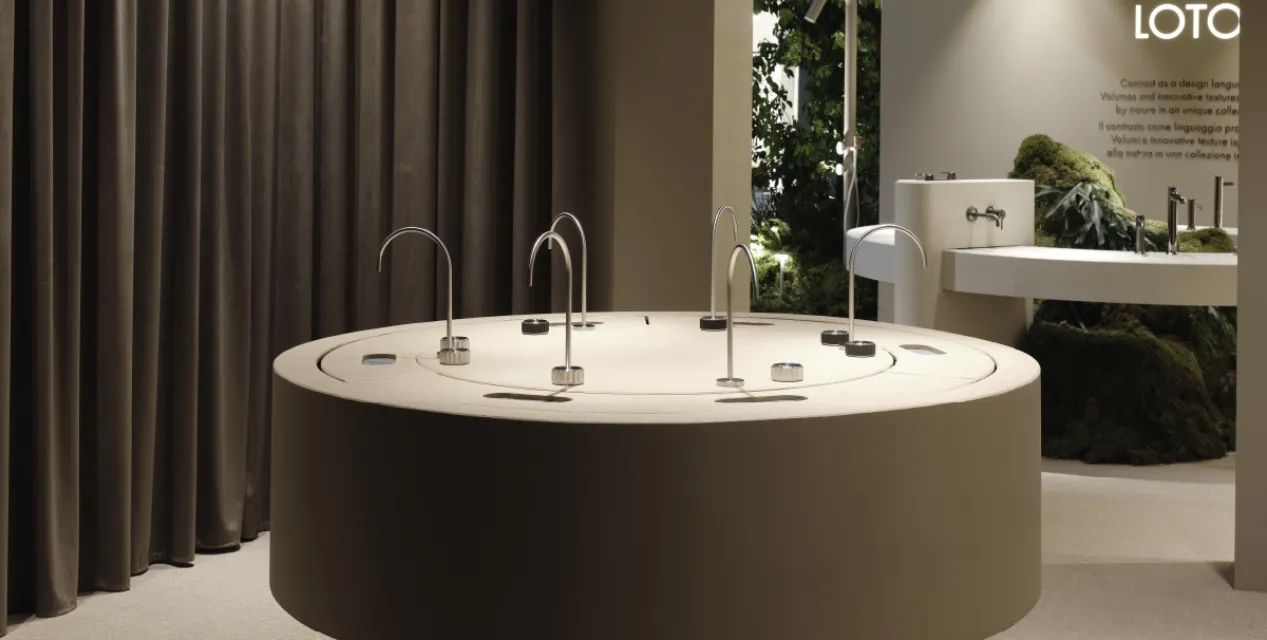
During the event, FIMA introduced four new collections: NIHIL, THEA, LOTO, and LUME. Each explored a different relationship between water, material, and light.
NIHIL: Minimal Stainless Steel Precision
Designed by Davide Vercelli, NIHIL focused on reduction and simplicity. The collection used exposed stainless steel with slim proportions and tactile detailing.
A key feature was the knurled control surface, which created precise tactile feedback during operation. Instead of relying on decorative details, NIHIL focused on proportion and mechanical precision.
This approach reflects how luxury bathroom trends are moving toward long-term material honesty and restrained aesthetics.
THEA: A Rain Shower Framed by Light
THEA introduced a new interpretation of the rain shower experience. Developed with Studio Giò Forma, the circular showerhead combined a stone-effect surface with an integrated LED ring.
The lighting softly framed the water flow, creating a subtle halo effect around the shower. The result transformed a functional shower into a more atmospheric experience.
THEA also reflected another growing direction seen across Salone del Mobile Milano: integrating lighting directly into bathroom architecture.
LOTO: Nature and Surface Contrast
Designed by Ceriani Szostak, LOTO drew inspiration from the lotus leaf and the movement of water droplets.
The collection combined textured architectural surfaces with smooth and polished control elements. FIMA also introduced advanced galvanic and PVD finishes, including warm tones such as Amber Bronze and Gold Champagne.
These finishes aligned with broader luxury bathroom trends focused on warmth, tactility, and material depth.
LUME: Glass, Light and Water Combined
Among all launches, LUME stood out as one of the most experimental concepts. Designed with glass specialists Melogranoblu, the collection used handcrafted borosilicate glass to create a shower system that also functioned as a light source.
The ribbed glass surface diffused light across surrounding surfaces while water and illumination could be controlled independently. LUME showed how bathrooms are evolving into sensory spaces where architecture, lighting, and wellness overlap.
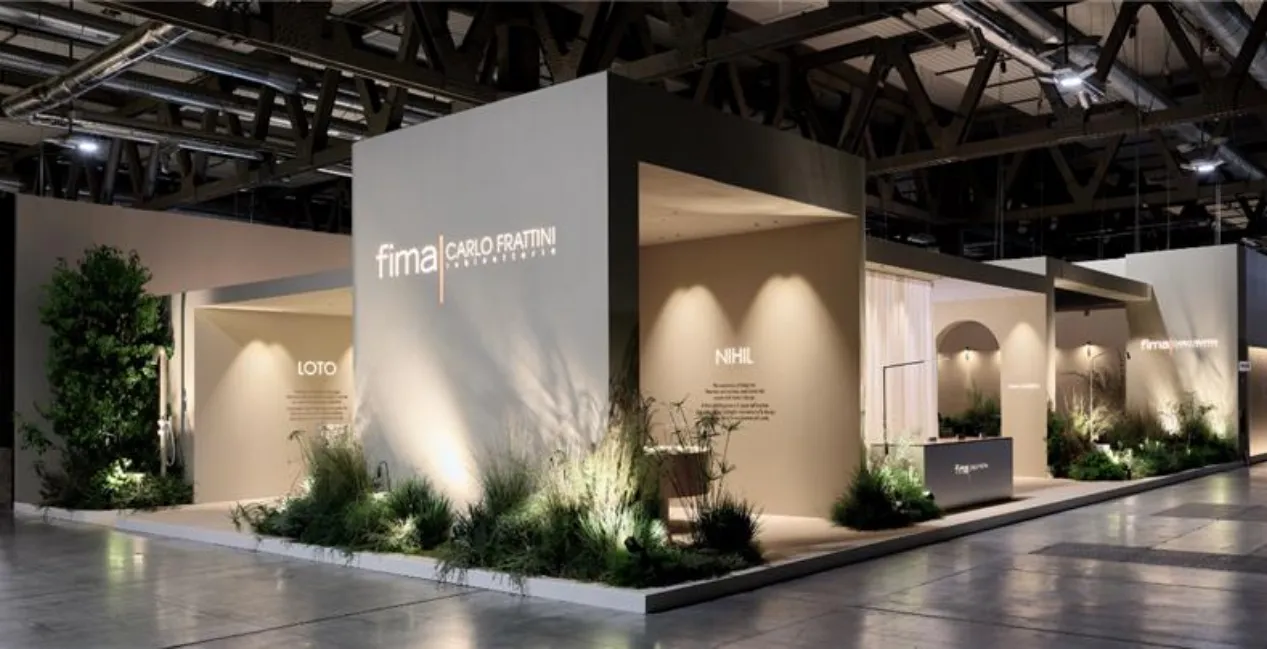
 25/05/2026